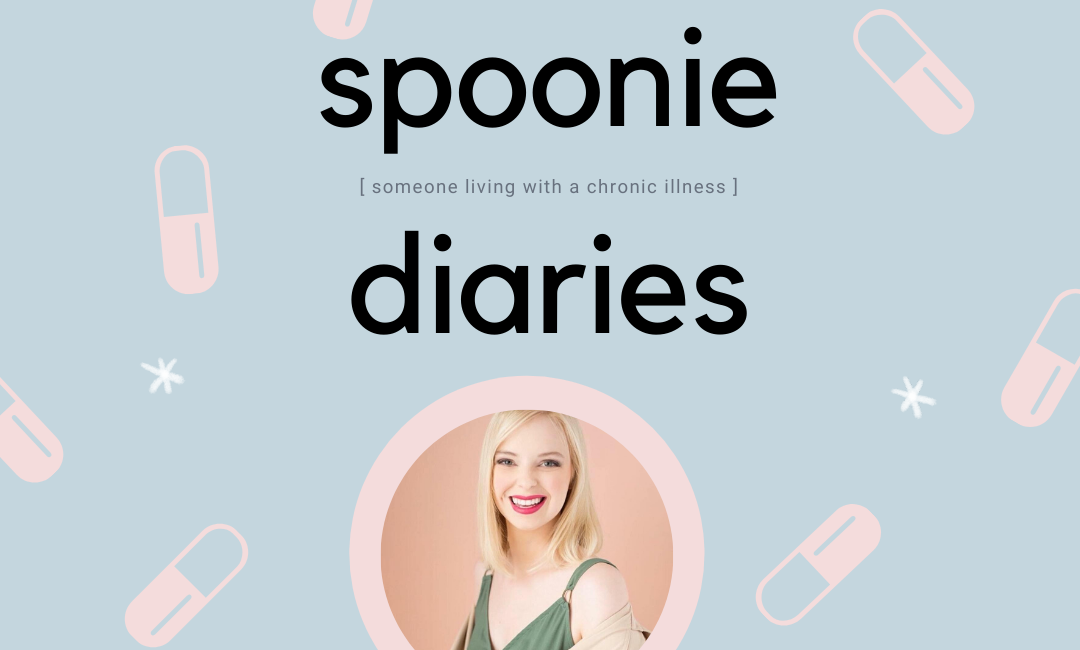
Today’s Spoonie Diaries is being taken over by the lovely Jackie from @yougottaletmeknow. I think you’re going to enjoy todays post as Jackie has some brilliant advice for fellow spoonies!
She’s also discussing an illness I know I’ve not really heard of before, Sjogren’s Syndrom. So I hope that this is informative for you. And if you’re living with Sjogren’s Syndrom, I hope this helps you!
So, lets get to know Jackie!
What is your chronic illness and how did you get your diagnosis?
I have Sjogren’s Syndrome, Fibromyalgia, Small Fiber Neuropathy, and Chronic Migraines.
About five years ago, I woke up one morning and fell when I tried to get out of bed. My legs were completely numb and I couldn’t walk. I spent a lot of time with my neurologist and then was referred to a rheumatologist.
Both doctors did extensive testing and blood work. My blood work was positive for Sjogren’s and I later had a biopsy that showed small fiber neuropathy.
What was your initial reaction to hearing your diagnosis?
I was scared. I was given a lot of information in a short amount of time. My head was spinning from all of it and I wasn’t sure how I would manage it. I was worried that my life was going to change drastically (spoiler alert – it did).
How much did you know about your chronic illness before you were diagnosed? What was your initial reaction?
I had never heard of Sjogren’s Syndrome before. I was definitely scared as I didn’t know what it meant for my lifestyle or how it would affect me long term. I started reading up on the disease and was definitely overwhelmed by all of the information.
What is one thing you’ve learnt from being chronically ill?
I’ve learned how strong and resilient I am.
Every time I think I can’t fight through it anymore, I do and I come out stronger. I’ve also learned that losing friends is not the end of the world.
The friends who support you unconditionally, check in on you often and understand when you have to cancel plans are true friends.
How did you make the decision to openly discuss your diagnosis and journey being chronically ill? Was it an easy decision to make?
I went back and forth about sharing my journey. I struggled with that thought that people would think I was just complaining or attention seeking.
However, the more I met people who openly talked about their illness, the more inspired I was. I realized that my own story is unique, but many people might be able to relate to it.
How has being chronically ill affected your life? Have you made major changes?
My life has changed a lot. I usually have two doctor’s appointments a week at minimum. I feel like I spend a good chunk of my life at appointments and at the pharmacy picking up medication.
I used to be involved with choreographing musical theatre productions as well as performing. Due to my illnesses, I can no longer choreograph as it takes too much out of me. I also have to be very selective when auditioning for shows as the rehearsal and performance process takes a large toll on my body.
And lastly, a few years ago I was studying Psychology but could not finish. I was working full time and trying to handle my illnesses – it was a lot. I am fortunate to still be able to work full time, but I take a lot of time off for appointments and often have to work from home because I can’t make it into the office.
If you could give one piece of advice to someone who has been newly diagnosed, what would you tell them?
Advocate for yourself. You will come across all kinds of doctors and specialists who may tell you that your tests are fine and you shouldn’t be in pain. If you are suffering, push back.
If you doctor doesn’t take you seriously or says there’s nothing else you can try, find another doctor. I know it can be nerve-racking to tell a doctor that you’re unhappy with them, but it’s necessary.
Find people who will advocate on your behalf. There are plenty of doctors out there who care and will fight for their patients, but sometimes it takes some time to find the right care team.
Do you think your physical health has impacted your mental health? Have you ever sought help for it and do you have any coping mechanisms?
It has definitely impacted my mental health. It’s very challenging to always be in pain or be too tired to leave the house.
Prior to my chronic illness diagnosis, I was diagnosed with depression and anxiety. It’s very easy to get trapped in a negative cycle of thinking where you feel like a failure for staying in bed or for not having the energy to do a simple chore around the house.
I have been in therapy on and off for several years. Learning to cope with being chronically ill is not an easy thing. Therapy has been extremely helpful for me along with the support and understanding of my closest friends.
In addition to therapy, I try to remind myself of the truth as opposed to the lies and stories my brain is telling me. For example, I may be thinking that I’m a failure and a letdown, but the truth is that I’m doing my best and taking care of me. Taking care of yourself is okay.
What do you wish your friends and family knew/understood about your illness/disability?
I wish they understood the guilt I feel when I have to cancel plans. I don’t have a choice and there is no way to know when pain or fatigue will strike. When I have to miss family gatherings or cancel plans with my friends, it’s out of my control.
I could be having a great day and then suddenly be hit with a monumental amount of pain. I’m not just “tired” and I don’t “just have a headache.”
The chronic illness I deal with means unpredictable and debilitating pain. I would never wish this on anyone, but I do wish people would spend some time thinking about what it’s like to be chronically ill.
Finally, what does chronically living mean to you? Do you have any advice for readers going through similar things?
It means saying strong and never giving up. It means continuing on through this crazy journey even though it is extremely difficult. A phrase I often tell myself is, “Just have a little faith.”
My advice is to reach out when you need help or support. The people who care about you will be more than happy to help you however they can. Do not try to go through this alone. I have made so many amazing friends and most of them I’ve met on the internet. Don’t hesitate to reach out. In my experience, most people who openly share their journey would be more than happy to talk to you. (You may reach out to me at any time!)
Look for support groups. Use hashtags to find others on Instagram who are dealing with similar things. It’s so important to be able to talk to others who “get it.” You are not alone in this even if it feels like it sometimes. Lean on others when you’re feeling alone. You will get through this.
A massive thank you to Jackie for sharing her story. Make sure you check out her instagram here. If you want to take part in the spoonie diaries, email me hello@ktmy.co.uk.

Leave a Reply